This is a simple and fun variation on the traditional Bingo game.
Materials:
1)Make Bingo cards with different types of fruits and vegetables; use lesser known plants so kids can learn about a brand new fruits and veggies!
--For example, try using kiwis and kohlrabi instead of potatoes and apples.
--Make enough cards for the number of children in your class.
3) Cards with the names of all the fruits and vegetables used on your bingo cards for the caller to shout out.
4)Cards with the letters (B-I-N-G-O)
Activity
1)Have the caller draw a letter and a fruit/veggie card. They will call something like “B-Eggplant”
2) When a child gets a row, they call out Bingo.
3) If possible, have these “strange” fruits and veggies available for students to sample after the game.
Showing posts with label food. Show all posts
Showing posts with label food. Show all posts
Monday, December 6, 2010


Thursday, November 18, 2010
Activity: Thanksgiving Comparisons
Here’s an activity where students are able to compare food eaten during the first Thanksgiving compared to what they eat for Thanksgiving today. Under the activity instructions is an overview of the first Thanksgiving meal.
Materials:
Paper to draw a Venn Diagram
Activity:
1) Discuss the history of the first thanksgiving and the food served there.
2) Have students draw a Venn Diagram and have them label one circle “First Thanksgiving” and the other circle “Thanksgiving Today”.
3)Students should write foods that they learned were eaten at the first Thanksgiving and foods that are eaten today. The center of the Venn diagram should include foods that were eaten then and are still eaten today.
It is believed that the Pilgrims and the Wampanoag Indians celebrated the very first Thanksgiving feast after harvest in 1621 in Plymouth, MA. It was held as a religious outdoor festival, where hundreds of people gathered to partake in the festivities. It was originally held as a three day celebration.
Historians believe that the menu consisted of venison, roasted turkey, wild fowl including ducks, geese and swans, fish, and lobsters. Vegetables served included pumpkins, squash, beans, dried fruits, cranberries, and dried corn. The sugar supply brought over on the Mayflower from England was nearly exhausted by the time of the first Thanksgiving, so it is widely assumed that wheat pudding may have been on of the only sweet dishes served.
The pilgrims used many spices, including cinnamon, ginger, nutmeg, pepper, and dried fruit in the meat sauces they prepared. Many of the meats were put on a spit and turned over a fire for six hours. Since ovens were yet to be invented, pies, cakes, and breads most likely were not at the first Thanksgiving table.
Have a wonderful Thanksgiving!
Materials:
Paper to draw a Venn Diagram
Activity:
1) Discuss the history of the first thanksgiving and the food served there.
2) Have students draw a Venn Diagram and have them label one circle “First Thanksgiving” and the other circle “Thanksgiving Today”.
3)Students should write foods that they learned were eaten at the first Thanksgiving and foods that are eaten today. The center of the Venn diagram should include foods that were eaten then and are still eaten today.
It is believed that the Pilgrims and the Wampanoag Indians celebrated the very first Thanksgiving feast after harvest in 1621 in Plymouth, MA. It was held as a religious outdoor festival, where hundreds of people gathered to partake in the festivities. It was originally held as a three day celebration.
Historians believe that the menu consisted of venison, roasted turkey, wild fowl including ducks, geese and swans, fish, and lobsters. Vegetables served included pumpkins, squash, beans, dried fruits, cranberries, and dried corn. The sugar supply brought over on the Mayflower from England was nearly exhausted by the time of the first Thanksgiving, so it is widely assumed that wheat pudding may have been on of the only sweet dishes served.
The pilgrims used many spices, including cinnamon, ginger, nutmeg, pepper, and dried fruit in the meat sauces they prepared. Many of the meats were put on a spit and turned over a fire for six hours. Since ovens were yet to be invented, pies, cakes, and breads most likely were not at the first Thanksgiving table.
Have a wonderful Thanksgiving!
Friday, May 14, 2010
Activity: Dirt Made My Lunch
 Recently when speaking with a first grade teacher who had started a classroom gardening project, she told that one of her inquisitive students asked, "Why can't we just plant pizza?"
While an amusing question, the teacher used this as a teaching moment using the following activity.
Materials:
- Pictures of food items. (You will need pictures of each ingredient and the corresponding steps it takes as you trace it to the soil)
- Cheeseburger
- Bun: flour, wheat, soil
- Burger: beef, cow, grass, soil
- Cheese: milk, cow, grass, soil
- Pickle: vinegar, cucumber, cucumber plant, dill plant, soil
- Ketchup: tomato plant, soil
- Pizza
- Dough: flour, wheat, soil
- Cheese: milk, cow, grass, soil
- Tomato Sauce: tomato plant, soil
- Tape or magnets
- Draw columns on the board and place each ingredient at the top (i.e. one column for bun, burger, cheese, pickle, and ketchup).
- Hand out the remaining pictures to the students.
- Taking one ingredient at a time, trace it back to the soil. Have the student with the corresponding item place it in the correct column.
- For example: Cheese comes from milk, which comes from a cow, which eats grass, which comes from the soil
- Trace other foods to the soil!
The teacher I spoke with said that her students LOVED this activity! They wanted to trace all sorts of foods to the soil and their garden!
Monday, April 19, 2010
Activity: Farmers Market
In this activity, students will practice their addition and subtraction skills.
Materials
Materials
- Fruits and vegetables (either real, plastic, or pictures)
- Price tags
- Budget or play money for students
- Shopping list or recipe (optional)
- Set up your classroom like a farmers market so that each student's desk sells a different fruit or vegetable.
- Create price tags or signs with the price of each of the fruits and vegetables.
- Have the students rotate between being shoppers and farmers.
- When students are shoppers, give them play money and have them figure out what they can purchase at the market. Shoppers can also use a shopping list or recipe so that they have some direction on what they can purchase.
- When the students are farmers, they must calculate the appropriate change for the shoppers.
- Have the students rotate between being shoppers and farmers.
- When you are finished, use the fruits and vegetables for a snack.
- Using copies of a grocery store's weekly flyer have students figure out what healthy foods they can purchase for a designated dollar amount. Have students describe how much they spent, how much money they had left over, and why they chose the foods that they did.
- Have students complete the Grocery Shopping Worksheet.
Monday, March 1, 2010
March School Garden Ideas
At the beginning of each month, the Got Dirt? WI blog will feature a variety of month-specific ways to incorporate your school garden into your classroom.
It's the beginning of March, which means spring is on its way! Below are some suggestions for incorporating a garden into your classroom for the month of March.
It's the beginning of March, which means spring is on its way! Below are some suggestions for incorporating a garden into your classroom for the month of March.
- March 1-May 3: The Great American Cleanup--A time to beautify parks and recreation areas, plant trees and flowers, and pick up litter. Take this time to clean up your local park or start to prepare your outdoor garden for planting.
- March 11: Johnny Appleseed Day--Read a story about Johnny Appleseed and have an apple-themed day. Taste different types of apples, discuss how apples grow, and make apple art!
- March 17: St. Patrick's Day--You may have heard of a fairy garden, but why not create a leprechaun garden! Think miniature! Have children imagine the leprechauns in the garden and write a story about their mischievous ways!
- March 20: National Agriculture Day--Discuss Agriculture in Wisconsin. Invite a farmer or gardener to visit your class. Have students eat food made in Wisconsin. Discuss all of the ways that agriculture impacts us daily.
- March 26: Make Up Your Own Holiday Day--Have students brainstorm ideas for a new holiday and what they would do to celebrate it. Get creative and use it as a day to celebrate your garden!
- March 30: Take a Walk in the Park Day--Go for a walk and identify different types of plants. Identify trees and their plant parts. Walk through your garden and have students plan what they want to plant.
Thursday, January 7, 2010
Activity: Don't Forget Your Fruits and Vegetables!
This activity helps to teach and reinforce the parts of a plant (seeds, roots, stems, leaves, flowers and fruit). It also allows students to recognize the parts of a plant that we eat.
Materials:
Activity:
Variation:
Play I Spy with the fruits and vegetables. Using the same idea, place items on the table and first have students identity the name of the fruit/vegetable and the part of the plant. Then students, "I spy with my little eyes....a root that is orange!" [Answer: Carrot]. Have students take turns picking the items.
*Suggested fruits/vegetables, according to plant part
Materials:
- A variety of fruits and vegetables to represent parts of the plant*
- Table/Flat surface
- Cloth
Activity:
- Place all of the fruits and vegetables on the table and tell students to gather around.
- Have students identify the names of the fruits and vegetables and the corresponding part of the plant they represent.
- Tell students they will have to remember the items on the table. Give students a couple of minutes to look at and remember the items.
- Cover the items with a cloth and carefully remove one or several items without the students seeing. Meanwhile, ask the students to explain the functions of the different plant parts or ask what plants need to grow.
Seeds: Contain everything the plant needs to grow
Roots:
Anchor the plant, provide support, and absorb nutrients and water
Stems: Carry nutrients from the roots to the leaves
Leaves: Make food for the plant
Flowers and Fruit:
Help the plant reproduce
- After removing an item, uncover the fruits and vegetables and ask the students what's missing.
- Repeat as many times as desired!
Variation:
Play I Spy with the fruits and vegetables. Using the same idea, place items on the table and first have students identity the name of the fruit/vegetable and the part of the plant. Then students, "I spy with my little eyes....a root that is orange!" [Answer: Carrot]. Have students take turns picking the items.
*Suggested fruits/vegetables, according to plant part
- Seeds:
- Almonds
- Brazil nuts
- Cashews
- Peas
- Pumpkin seeds
- Sunflower seeds
- Roots
- Beets
- Carrots
- Horseradish
- Parsnip
- Rutabagas
- Sweet potatoes
- Turnips
- Stems
- Asparagus
- Garlic
- Ginger
- White potatoes
- Leaves
- Cabbage
- Collards
- Kale
- Lettuce
- Mustard
- Parsley
- Spinach
- Flowers
- Broccoli
- Chive blossoms
- Garlic blossoms
- Squash blossoms
- Fruits
- Apples
- Cucumbers
- Grapes
- Peaches
- Pears
- Peppers
- Pumpkins
- String beans
- Tomatoes
Monday, December 21, 2009
Activity: Veggie Stamp Holiday Cards
Instead of using store bought holiday cards, consider having students make their own unique cards using fruits and vegetables.
Materials:
Activity:
Materials:
- Paper
- Tempera paints
- Paper plates
- Paint brushes
- Knife
- Various fruits and vegetables, such as potatoes, cucumbers, star fruit, apples, mushrooms, carrots, or broccoli.
Activity:
- Cut fruits and vegetables into manageable sizes for kids to use as stamps. If you're feeling creative, try carving shapes, such as stars, hearts or letters, out of the potatoes or other fruits and vegetables.
- Put tempera paint onto paper plates for each student.

- Instruct students to use the paint brushes to apply paint to the fruits and vegetables and then stamp them onto paper. Students can create collages or try to create a holiday scene for a holiday card.
- Don't forget to remind students to not snack on their stamps. ;)
- Let their artwork dry and then proudly display their work around the classroom or give as gifts!

(photo from http://whipup.net/2006/09/18/veggie-prints/)
Tuesday, November 24, 2009
Activity: Estimating Tomato Seeds
Fresh fruits and vegetables can be excellent tools to teach basic math skills. In this activity, students will practice estimating, comparing and contrasting, and doing basic addition and subtraction.
Materials:
Cherry tomatoes (enough so each student gets ½ of a tomato)
Paper towels/napkins
Paper and pencils
One large tomato
A knife to cut food in half ahead of time
Activity:
Materials:
Cherry tomatoes (enough so each student gets ½ of a tomato)
Paper towels/napkins
Paper and pencils
One large tomato
A knife to cut food in half ahead of time
Activity:
- Explain to the students that today we are going to guess or estimate the number of seeds inside of a fruit or vegetable.
- Hand out ½ of a cherry tomato and paper towel/napkin to each student. Make sure that the students do not eat the tomato before completing the exercise.*
- Without actually counting the number of seeds, have students guess how many seeds are in their tomato half. Have them record the number on a piece of paper.
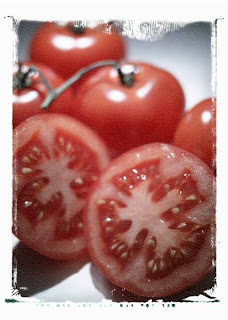
- Instruct students to count the seeds in their tomato.
- Have students record the actual number and figure out how close they were to their guess, allowing them to practice subtraction. Find out who was the closest.
- Have students compare the number of seeds in their tomato with a partner. Who has more seeds? How many seeds do they have all together?
- As a class, calculate the total number of seeds from all of the tomato halves. You can also calculate how many seeds one half of the room has compared to the other, how many seeds the girls had compared to the boys, etc. Each time students can either calculate the totals together as a class or do the addition on their own and then together as a class.
- Now ask students to guess how many seeds are in one large tomato. Record answers on the board or chart paper.
- Have students count the number of seeds in the tomato.
- Compare the number of seeds in the large tomato to the number of seeds in the cherry tomato halves and to the classes’ total number of cherry tomato seeds. Which has more?

Extension:
- Do the same activity with a different fruit/vegetable (ex: pumpkins, apples, peppers, watermelon, etc.)
- Have students calculate the mean (average), median (middle number), and mode (most frequent number) for the classes’ cherry tomato seeds
Monday, November 16, 2009
Grant Opportunity: Welch's Harvest Grant
Welch's and Scholastic will award two schools in every state with a customized indoor or outdoor garden package to teach children about nutrition and sustainable agriculture.
The awards are open to K-8 classrooms with a minimum of 15 students. The top five winners will receive a package valued at $1,000, the top 25 winners will receive a package valued at $500, and 70 winners will receive a package valued at $250. According to Welch's website, the award package includes garden tools, seeds and educational materials.
Remember that the White House's garden cost less than $200 to create. So no matter what, if you receive an award, you'll have enough to start a garden!
Applications must be submitted by February 6, 2010. Visit Welch's website for an application and additional information.
The awards are open to K-8 classrooms with a minimum of 15 students. The top five winners will receive a package valued at $1,000, the top 25 winners will receive a package valued at $500, and 70 winners will receive a package valued at $250. According to Welch's website, the award package includes garden tools, seeds and educational materials.
Remember that the White House's garden cost less than $200 to create. So no matter what, if you receive an award, you'll have enough to start a garden!
Applications must be submitted by February 6, 2010. Visit Welch's website for an application and additional information.
Friday, October 16, 2009
Resource: Children's Books about Food
The blog Obama Foodorama follows current efforts in food and agriculture policy in Washington.
A recent post, of interest to teachers, is entitled "'Where the Wild Things Are' Joins Another Foodcentric Children's Book on the Official Obama Reading List"
In the post, the blogger highlights children's books that reference food. It includes descriptions of
A recent post, of interest to teachers, is entitled "'Where the Wild Things Are' Joins Another Foodcentric Children's Book on the Official Obama Reading List"
In the post, the blogger highlights children's books that reference food. It includes descriptions of
- Duck for President
- The Curious Garden
- If You Give a Mouse a Cookie
- Six-Dinner Sid
- Stone Soup
- Alexander and the Terrible, Horrible, No Good, Very Bad Day
- The Lorax
- The Giving Tree
- I'm Gonna Like Me
Each of these stories offers important lessons about food, farming, gardening, etc. and would be a great resource or story to read to your class.
Subscribe to:
Posts (Atom)

 Posts
Posts

